
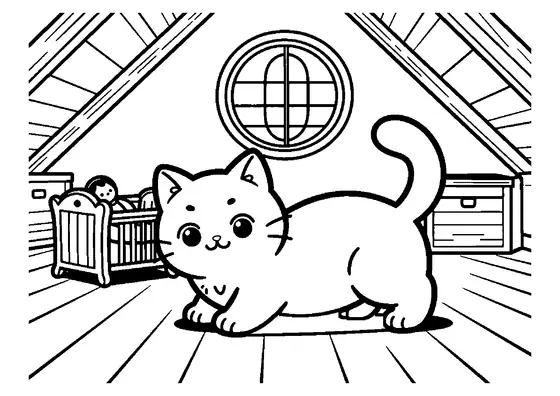
Kitten Beside a Carved Trunk in the Attic
An inquisitive kitten explores a quiet attic space beside an old wooden trunk with detailed carvings.

A4 format (portrait), black outlines on a white background · for home and classroom use
All coloring pages: Kitten Coloring Pages
Similar coloring pages: Kitten Coloring Pages


What else can you print? Free, no account needed
Custom Name Coloring Pages
Enter your child's name to generate a custom coloring page featuring large outline letters to color and decorate.
Open generator →Connect the Dots Generator
Eight connect-the-dots pictures across three difficulty levels. Features faint outline guides for younger children and dots only for older kids.
Open generator →Printables
Worksheets, tracing lines, mazes and dot-to-dots in A4.
Browse printables →
Curious Kitten in a House Attic
Attics are upper house rooms frequently used to store antique wooden chests, carved trunks, and household memory items. A young cat exploring an attic encounters unique wooden shapes and quiet storage corners.
History and Uses of Antique Carved Trunks
Carved wooden trunks were crafted historically to store textiles, family heirlooms, and travel goods. Skilled woodworkers carved decorative patterns into hardwoods like oak or walnut to strengthen and ornament storage boxes.
Natural Colors of an Attic Storage Scene
- Kitten coat fur: dark gray, silver tabby, or tortoiseshell pattern
- Wooden trunk exterior: rich mahogany, dark walnut, or weathered oak
- Metal trunk hinges and latch: tarnished brass, iron black, or bronze
- Attic floorboards: dusky brown, natural pine, or pale gray