
Kitten Beside a Pottery Kiln
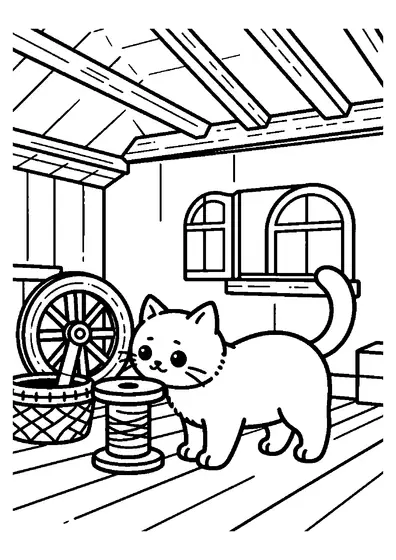
A craft workshop setting features a small cat sitting near a firing kiln, raw earthenware pottery, and a potter's wheel.

A4 format (portrait), black outlines on a white background · for home and classroom use
All coloring pages: Cat Coloring Pages
Similar coloring pages: Cat Coloring Pages



What else can you print? Free, no account needed
Custom Name Coloring Pages
Enter your child's name to generate a custom coloring page featuring large outline letters to color and decorate.
Open generator →Connect the Dots Generator
Eight connect-the-dots pictures across three difficulty levels. Features faint outline guides for younger children and dots only for older kids.
Open generator →Printables
Worksheets, tracing lines, mazes and dot-to-dots in A4.
Browse printables →
Inside the Artisan Ceramics Studio
This scene portrays a young feline resting in a pottery workshop alongside essential artisan equipment. The room features a large clay pot, a ceramic firing kiln, a pottery wheel, and wooden display shelves built over a clay floor. Artisan studios bring together raw materials and specialized tools where craftspeople shape wet clay into durable vessels.
Pottery Making and Studio Tools
Ceramic studios center around shaping pliable clay using a rotating pottery wheel driven by a foot pedal or motor. Once vessels dry to a leather-hard state, they are fired inside a high-temperature kiln that permanently hardens the clay structure. Cats frequently enjoy workshop environments due to the warmth generated by firing equipment and quiet surroundings.
Colors of a Pottery Workshop
- Kitten fur: white with black spots, ginger tabby, or gray
- Clay pot: terracotta red, sandy beige, or unglazed brown
- Pottery wheel: dark iron gray or muted steel
- Firing kiln: light gray heat bricks or off-white ceramic wall
- Studio floor and shelves: warm reddish clay brown and natural wood