
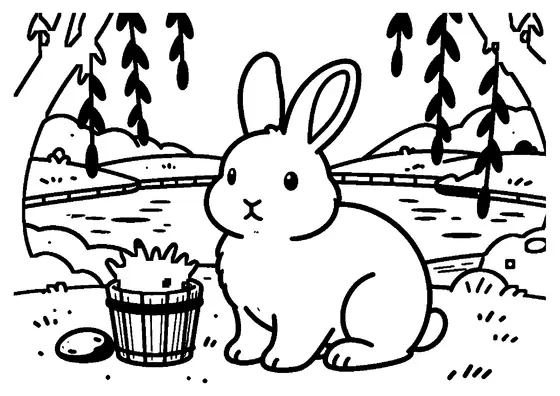
Angora Rabbit by a Botanical Garden Fountain
An Angora rabbit sits in a glass conservatory surrounded by exotic flora and a fountain.

A4 format (portrait), black outlines on a white background · for home and classroom use
All coloring pages: Bunny Coloring Pages
Similar coloring pages: Bunny Coloring Pages



What else can you print? Free, no account needed
Custom Name Coloring Pages
Enter your child's name to generate a custom coloring page featuring large outline letters to color and decorate.
Open generator →Connect the Dots Generator
Eight connect-the-dots pictures across three difficulty levels. Features faint outline guides for younger children and dots only for older kids.
Open generator →Printables
Worksheets, tracing lines, mazes and dot-to-dots in A4.
Browse printables →
An Angora Rabbit in a Glass Conservatory
Angora rabbits are known for their extremely long, soft coats, which require delicate grooming. In a botanical garden setting, these animals encounter a warm, humid environment filled with exotic indoor plants, stone fountains, and wooden pathways. Glass conservatories provide controlled temperatures that protect delicate plant species year-round while keeping out harsh weather.
Facts About Angora Rabbits and Botanical Gardens
Angora rabbit wool is harvested by gentle shearing or plucking several times a year without harming the animal. Historical conservatories were created in Europe during the nineteenth century to collect tropical vegetation brought from global expeditions. These glass structures trap solar heat to maintain tropical climates regardless of external winter temperatures.
Real Colors of Angora Rabbits and Conservatories
- Angora rabbit fur: White, cream, gray, or brown
- Rabbit eyes: Dark brown, blue, or pinkish red
- Botanical garden plants: Vibrant green, deep emerald, or burgundy leaves
- Wooden walkway: Natural brown, weathered tan, or dark timber
- Birdbath fountain: Gray stone, terra cotta, or weathered granite