
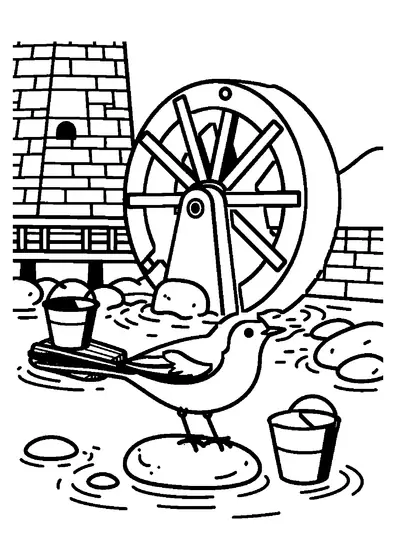
White Wagtail by a Mountain Stream
A slender white wagtail perches on a wet river rock beside a fast-flowing mountain stream.

A4 format (landscape), black outlines on a white background · for home and classroom use
All coloring pages: Bird Coloring Pages
Similar coloring pages: Bird Coloring Pages




What else can you print? Free, no account needed
Custom Name Coloring Pages
Enter your child's name to generate a custom coloring page featuring large outline letters to color and decorate.
Open generator →Connect the Dots Generator
Eight connect-the-dots pictures across three difficulty levels. Features faint outline guides for younger children and dots only for older kids.
Open generator →Printables
Worksheets, tracing lines, mazes and dot-to-dots in A4.
Browse printables →
Riverbank Wildlife Habitat of the White Wagtail
White wagtails are small, active songbirds frequently observed near riverbanks, mountain streams, and freshwater lakes. These nimble birds forage along rocky water edges, searching for insects washed ashore or hovering near the water surface. River rocks in rushing mountain streams offer elevated vantage points from which wagtails monitor insect activity and watch for potential danger.
Unique Behaviors of the White Wagtail
The white wagtail gets its name from its distinctive habit of constantly pumping its long tail up and down while walking or standing. These birds exhibit an energetic undulating flight pattern, rapidly flapping their wings before gliding gracefully through the air. Wagtails are highly adaptable insectivores, capable of catching midges and small flies right out of the air near mountain streams.
Natural Colors of the White Wagtail and River Scenery
- Wagtail head and bib: contrast of jet black cap and throat with white cheeks
- Wagtail back and wings: sleek medium gray with white wing bar stripes
- Wagtail belly: clean white plumage
- River rocks: smooth slate gray, granite charcoal, or wet dark brown stones
- Mountain stream water: clear blue-green or shimmering light turquoise reflection