
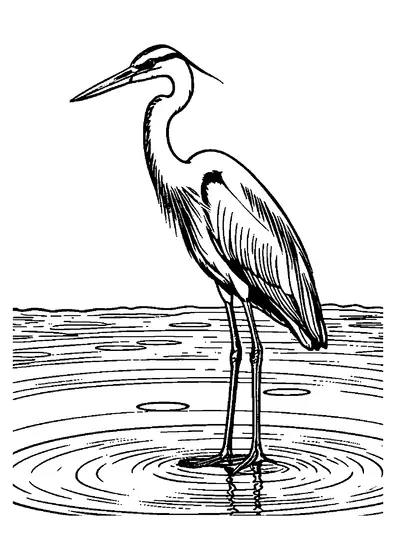
Swan Swimming on the Water
A swan glides across rippling water with its head raised and its long neck curved gracefully.

A4 format (landscape), black outlines on a white background · for home and classroom use
All coloring pages: Bird Coloring Pages
Similar coloring pages: Bird Coloring Pages




What else can you print? Free, no account needed
Custom Name Coloring Pages
Enter your child's name to generate a custom coloring page featuring large outline letters to color and decorate.
Open generator →Connect the Dots Generator
Eight connect-the-dots pictures across three difficulty levels. Features faint outline guides for younger children and dots only for older kids.
Open generator →Printables
Worksheets, tracing lines, mazes and dot-to-dots in A4.
Browse printables →
Swan Swimming on the Water
The bird moves across the water with its full feathered body resting at the surface. Its extended neck bends upward toward a raised head, where the eye and bill are visible. Gentle ripples surround the swan, while the area above the water contains no plants, shoreline, or other animals.
Facts about a swimming swan
A swan’s broad webbed feet work like paddles beneath the surface, pushing water backward as the bird moves forward. Its neck allows it to reach aquatic vegetation below the water without diving with its entire body. The visible calm above the surface can hide steady foot movements underneath.
Real colors of a swan on the water
- Adult swan feathers: usually white in familiar northern species, though some swan species have black plumage
- Young swan feathers: commonly soft gray or gray-brown before adult plumage develops
- Bill: orange with black markings in a mute swan, while other species may have black, yellow, or red areas
- Eye: dark brown to black
- Legs and webbed feet: generally dark gray, black, or muted pinkish gray, depending on the species