
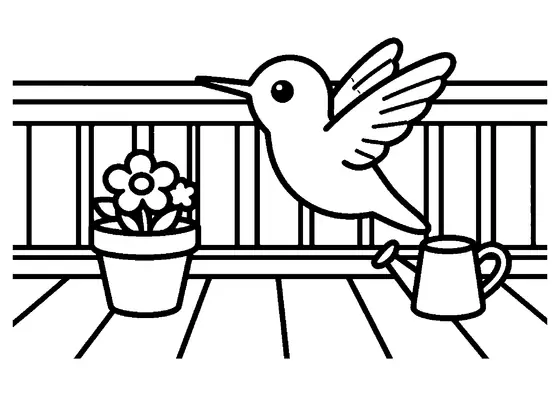
Rufous Hummingbird at a Hanging Garden Feeder
An agile rufous hummingbird pauses mid-flight alongside a hanging garden feeder inside a lush indoor conservatory.

A4 format (portrait), black outlines on a white background · for home and classroom use
All coloring pages: Bird Coloring Pages
Similar coloring pages: Bird Coloring Pages


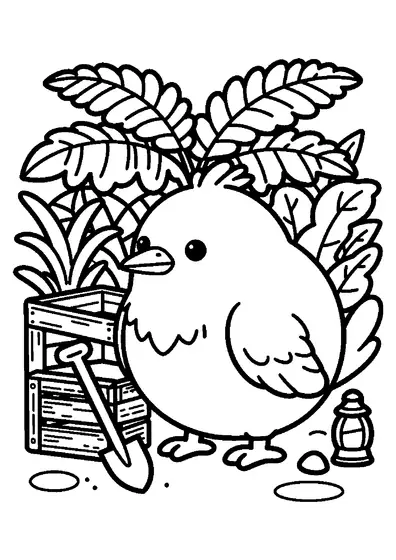
What else can you print? Free, no account needed
Custom Name Coloring Pages
Enter your child's name to generate a custom coloring page featuring large outline letters to color and decorate.
Open generator →Connect the Dots Generator
Eight connect-the-dots pictures across three difficulty levels. Features faint outline guides for younger children and dots only for older kids.
Open generator →Printables
Worksheets, tracing lines, mazes and dot-to-dots in A4.
Browse printables →
Hummingbirds in Garden Spaces
The rufous hummingbird is famous for its exceptional flight maneuverability, capable of hovering effortlessly beside sugar-water feeders. Indoor gardens and conservatories provide a sheltered environment where these tiny nectar feeders can find abundant food source locations.
Long Migrations and Energetic Flight
Rufous hummingbirds undergo one of the longest migratory journeys of any bird relative to their body length, traveling up to four thousand miles between Alaska and Mexico. Their wings beat around fifty to eighty times per second, requiring constant high-energy nourishment throughout the day.
True Colors of the Rufous Hummingbird
- Male body feathers: Bright orange-red reddish rust tone across back and head
- Gorget throat patch: Iridescent copper-red feather throat mask
- Female back plumage: Bronzy-green upper parts with rufous flanks
- Garden feeder: Bright red ports with clear container body