
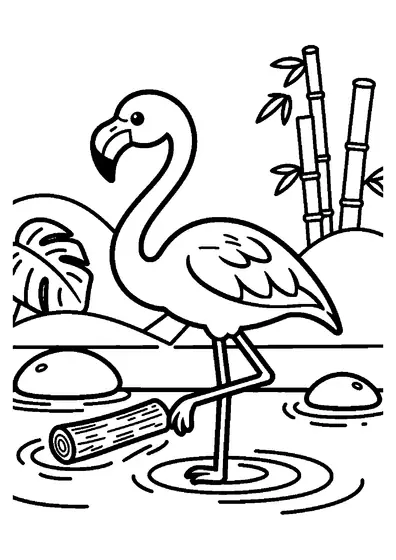
Pink Flamingo Beside a Wooden Beach Chair
An elegant flamingo stands on a sunny beach near a wooden lounge chair, umbrella, and coastal hut.

A4 format (portrait), black outlines on a white background · for home and classroom use
All coloring pages: Bird Coloring Pages
Similar coloring pages: Bird Coloring Pages


What else can you print? Free, no account needed
Custom Name Coloring Pages
Enter your child's name to generate a custom coloring page featuring large outline letters to color and decorate.
Open generator →Connect the Dots Generator
Eight connect-the-dots pictures across three difficulty levels. Features faint outline guides for younger children and dots only for older kids.
Open generator →Printables
Worksheets, tracing lines, mazes and dot-to-dots in A4.
Browse printables →
Flamingo on a Sunny Beach Coast
This coastal scene showcases a flamingo standing on the sand near a wooden lounge chair. The surrounding environment features a beach umbrella and a small wooden hut by the shore.
Fascinating Facts About Flamingos
Flamingos spend much of their time in shallow alkaline lakes and coastal lagoons filtering food from the water. They naturally feed upside down by dipping their heads into the mud and pumping water through specialized bill structures called lamellae. Their unique pink coloration comes directly from pigments in the microscopic algae and small crustaceans they digest.
Real Colors of a Flamingo and Shore Environment
- Flamingo plumage: Soft pink to vibrant coral red
- Flamingo legs and beak tip: Pale pink with a dark black tip on the beak
- Wooden chair and hut: Natural tan, faded gray, or brown timber
- Beach umbrella: Bright stripes such as red, blue, or yellow
- Sand: Warm cream or golden yellow