
Flamingo at a River Estuary
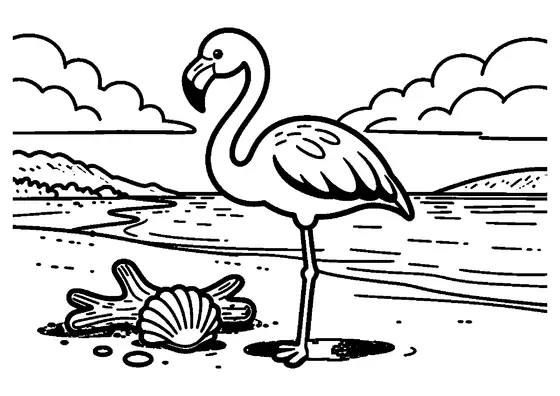
A flamingo steps across a sandbar beside a seashell in a broad river estuary during low tide.

A4 format (landscape), black outlines on a white background · for home and classroom use
All coloring pages: Parrot and Flamingo Coloring Pages
Similar coloring pages: Parrot and Flamingo Coloring Pages

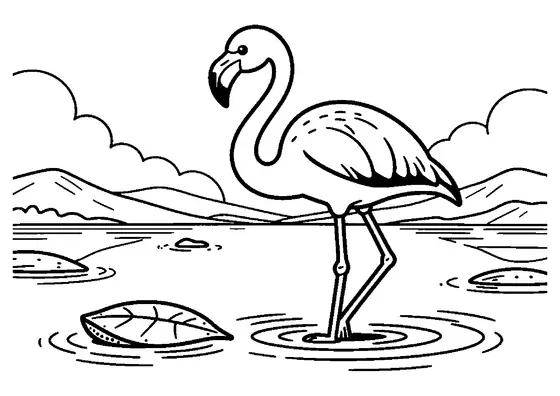

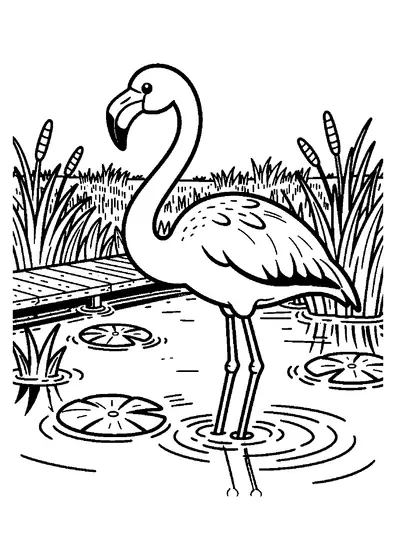

What else can you print? Free, no account needed
Custom Name Coloring Pages
Enter your child's name to generate a custom coloring page featuring large outline letters to color and decorate.
Open generator →Connect the Dots Generator
Eight connect-the-dots pictures across three difficulty levels. Features faint outline guides for younger children and dots only for older kids.
Open generator →Printables
Worksheets, tracing lines, mazes and dot-to-dots in A4.
Browse printables →
Flamingo Along a Coastal Estuary
A large flamingo walks along a tranquil river estuary during low tide. Exposed sandy bars cut across wide water channels, while a single seashell lies resting on the damp riverbank sand.
Life in Tidewater River Estuaries
Estuaries where freshwater rivers meet tidal ocean currents are among the richest feeding grounds for wading birds. As low tide exposes shallow sandbars and mudflats, flamingos march through the calm water channels to filter small crustaceans and aquatic insects from the mud. Seashells and coastal organic debris accumulate on these temporary sandbars with every receding tide.
Realistic Colors of Coastal Estuary Elements
- Flamingo plumage: delicate rose pink with dark pink accents along the wings
- Estuary seashell: creamy white, soft peach, or light tan shell pattern
- Exposed sandbars: wet golden sand, light beige, or gray silt
- Estuary water channels: reflective light blue and muddy brownish-green
- Flamingo bill: yellow-pink base with a black tip