
Long-Eared Owl on an Old Manor Terrace
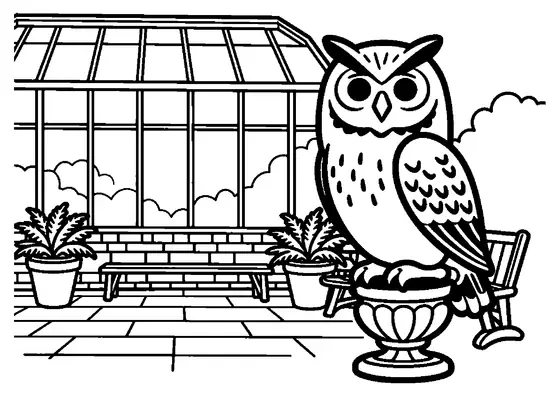
A long-eared owl with prominent head tufts roosts on a carved stone railing beside potted geraniums and a courtyard bench.

A4 format (landscape), black outlines on a white background · for home and classroom use
All coloring pages: Owl Coloring Pages
Similar coloring pages: Owl Coloring Pages



What else can you print? Free, no account needed
Custom Name Coloring Pages
Enter your child's name to generate a custom coloring page featuring large outline letters to color and decorate.
Open generator →Connect the Dots Generator
Eight connect-the-dots pictures across three difficulty levels. Features faint outline guides for younger children and dots only for older kids.
Open generator →Printables
Worksheets, tracing lines, mazes and dot-to-dots in A4.
Browse printables →
Long-Eared Owl Resting on a Terrace
A long-eared owl perches along the decorated railing of a historic manor terrace. The setting includes stone architectural details, a planter filled with geranium flowers, and an outdoor seating bench placed along the open courtyard wall.
Unique Traits of Long-Eared Owls
The tall feather tufts on top of a long-eared owl's head are not actual ears, but specialized feathers used for communication and camouflage. When alarmed or roosting, the bird raises these tufts straight up to blend in with surrounding tree trunks or stone structures.
Natural Colors of the Long-Eared Owl and Terrace
- Long-eared owl plumage: Buff orange, brown, and charcoal streaks
- Owl facial disc: Bright orange-buff with white inner borders
- Terrace stone railing and bench: Pale gray, tan, and cream limestone
- Geranium flowers: Vibrant red and bright pink
- Geranium leaves: Rich medium green