
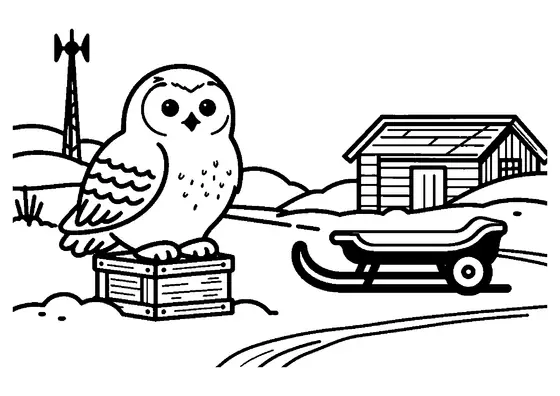
Long-Eared Owl on a Wooden Hay Wagon
A long-eared owl rests on the ladder frame of a wooden wagon filled with fresh countryside hay.

A4 format (landscape), black outlines on a white background · for home and classroom use
All coloring pages: Owl Coloring Pages
Similar coloring pages: Owl Coloring Pages


What else can you print? Free, no account needed
Custom Name Coloring Pages
Enter your child's name to generate a custom coloring page featuring large outline letters to color and decorate.
Open generator →Connect the Dots Generator
Eight connect-the-dots pictures across three difficulty levels. Features faint outline guides for younger children and dots only for older kids.
Open generator →Printables
Worksheets, tracing lines, mazes and dot-to-dots in A4.
Browse printables →
Long-Eared Owl on a Farm Hay Wagon
This rural scene depicts a long-eared owl perching on a wooden hay wagon in a farmyard setting. Bundles of dry hay fill the wagon bed, surrounded by traditional wooden side rungs and farm implements. The owl sits perched on the structure, observing the countryside landscape around the farm.
Life of Long-Eared Owls on Country Farms
Long-eared owls get their name from long tufts of feathers on top of their heads, which are not actual ears but feather displays used for communication. During non-breeding seasons, these social owls frequently gather in small communal roosts inside farm shelterbelts and orchard trees. Farmers value their presence near hay storage because they hunt mice and voles that nest in dried grass.
Typical Colors of the Country Farm Wagon
- Long-eared owl feathers: Mottled brown, buff, gray, and black feather patterns
- Long-eared owl eyes: Deep yellow to orange-yellow
- Dried farm hay: Pale straw, golden amber, and light olive-yellow
- Wooden wagon ladder: Natural weathered timber, oak brown, and dusty gray