
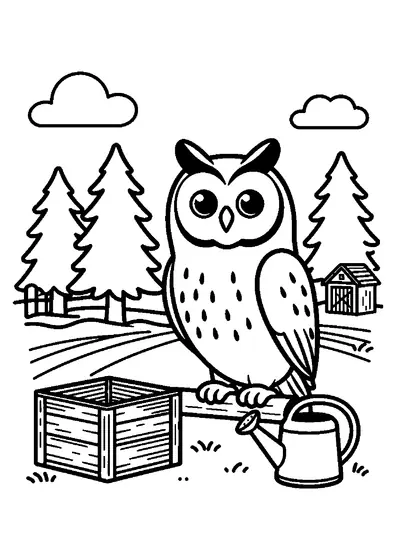
Long-Eared Owl on a Mountain Trail Signpost
A long-eared owl rests atop a wooden signpost along a high mountain trail.

A4 format (portrait), black outlines on a white background · for home and classroom use
All coloring pages: Owl Coloring Pages
Similar coloring pages: Owl Coloring Pages




What else can you print? Free, no account needed
Custom Name Coloring Pages
Enter your child's name to generate a custom coloring page featuring large outline letters to color and decorate.
Open generator →Connect the Dots Generator
Eight connect-the-dots pictures across three difficulty levels. Features faint outline guides for younger children and dots only for older kids.
Open generator →Printables
Worksheets, tracing lines, mazes and dot-to-dots in A4.
Browse printables →
Long-Eared Owls on Mountain Trails
This page features a long-eared owl resting on a wooden signpost located at a mountain pass. High mountain trails present open terrain where nocturnal birds utilize wooden markers and elevated structures to monitor their surroundings.
Fascinating Facts About Long-Eared Owls
Mountain passes often experience strong air currents that long-eared owls navigate effortlessly using their long, broad wings. The distinctive ear-like tufts on top of their head are not actual ears, but specialized feather clusters used for concealment among trees and wooden posts. During daylight hours, these birds remain motionless to blend naturally into their environment.
Natural Colors of the Scene
- Long-eared owl plumage: Mottled brown, buff, and gray with dark streaks
- Owl eyes: Vibrant yellow to deep orange
- Facial disc: Pale rust or tawny orange
- Wooden trail signpost: Weathered gray or natural brown wood