
Long-Eared Owl by a Sunflower Field
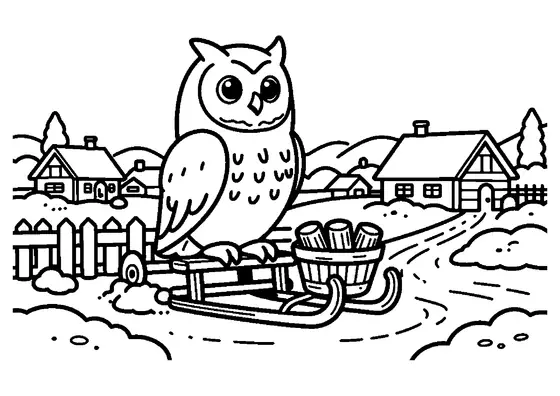
A long-eared owl perches on a wooden fence near tall sunflowers, a woven basket, a grain sheaf, plowed soil rows, and a countryside barn.

A4 format (landscape), black outlines on a white background · for home and classroom use
All coloring pages: Owl Coloring Pages
Similar coloring pages: Owl Coloring Pages



What else can you print? Free, no account needed
Custom Name Coloring Pages
Enter your child's name to generate a custom coloring page featuring large outline letters to color and decorate.
Open generator →Connect the Dots Generator
Eight connect-the-dots pictures across three difficulty levels. Features faint outline guides for younger children and dots only for older kids.
Open generator →Printables
Worksheets, tracing lines, mazes and dot-to-dots in A4.
Browse printables →
Long-Eared Owl at the Edge of a Sunflower Field
Positioned at the border of a sunny agricultural field, a long-eared owl sits perched atop a rustic wooden fence. The surrounding farm landscape features tall blooming sunflowers, a woven basket, a bound sheaf of wheat, neatly plowed soil furrows, and a traditional barn visible in the countryside distance.
The Life of Long-Eared Owls on Farmland
Long-eared owls are famous for the long, erect feather tufts on top of their heads, which look like ears but are actually used for expression and camouflage. These birds prefer open farmland, meadow edges, and field borders where they can hunt field mice while resting secretly in nearby trees or fence lines.
Natural Colors of the Long-Eared Owl and Farm Landscape
- Long-eared owl plumage: complex mix of buff, orange-brown, dark brown, and gray
- Long-eared owl eyes: bright yellow to deep orange
- Sunflower petals and centers: bright golden yellow petals with dark brown centers
- Wheat sheaf: pale straw yellow or dry golden tan
- Countryside barn: traditional barn red or weathered brown wood