
Barn Owl by a Grain Bin in a Country Mill
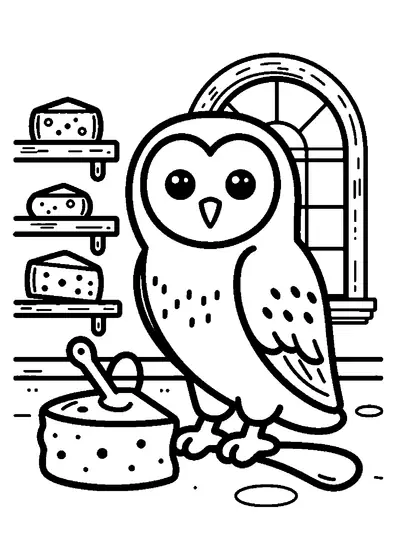
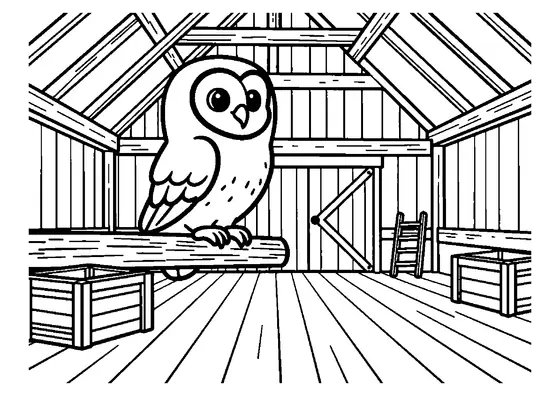
A heart-faced barn owl perches on a flour bin surrounded by grain sacks inside an old country mill.

A4 format (landscape), black outlines on a white background · for home and classroom use
All coloring pages: Owl Coloring Pages
Similar coloring pages: Owl Coloring Pages


What else can you print? Free, no account needed
Custom Name Coloring Pages
Enter your child's name to generate a custom coloring page featuring large outline letters to color and decorate.
Open generator →Connect the Dots Generator
Eight connect-the-dots pictures across three difficulty levels. Features faint outline guides for younger children and dots only for older kids.
Open generator →Printables
Worksheets, tracing lines, mazes and dot-to-dots in A4.
Browse printables →
Barn Owl Inside a Traditional Country Mill
Barn owls frequently nest inside farm buildings, wooden barns, and country mills where grain is stored. Rural grain mills keep sacks of harvested crops and large bins of flour, creating an ideal shelter for these beneficial birds.
Silent Guardians of the Granary
Barn owls are famous for their distinct heart-shaped facial disc, which funnels subtle sound waves directly into their ears. This extraordinary hearing allows them to catch small rodents in pitch darkness inside quiet grain storage rooms. Farmers traditionally welcomed barn owls into country mills because they protected stored grain crops from pests.
Authentic Colors of the Barn Owl and Mill
- Barn owl upper body: soft golden-burlap brown with delicate gray speckles
- Barn owl chest and face: pure white or soft pale cream
- Barn owl eyes: dark brown or black
- Grain sacks: natural beige jute canvas
- Flour bin: pale aged timber wood with white flour dusting