
Mallard Duck by a Stone Bridge in the Park
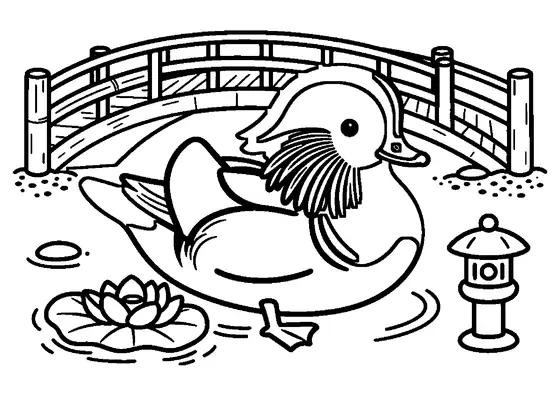
A wild mallard duck glides gracefully across a quiet park pond near floating water lily leaves and an arched stone bridge.

A4 format (landscape), black outlines on a white background · for home and classroom use
All coloring pages: Bird Coloring Pages
Similar coloring pages: Bird Coloring Pages



What else can you print? Free, no account needed
Custom Name Coloring Pages
Enter your child's name to generate a custom coloring page featuring large outline letters to color and decorate.
Open generator →Connect the Dots Generator
Eight connect-the-dots pictures across three difficulty levels. Features faint outline guides for younger children and dots only for older kids.
Open generator →Printables
Worksheets, tracing lines, mazes and dot-to-dots in A4.
Browse printables →
Mallard Ducks Swimming in City Park Ponds
Mallards are common wild ducks found swimming across calm ponds in urban parks and public gardens. They swim easily near stone bridges and floating aquatic vegetation, relying on clean freshwater bodies for feeding and resting.
Life and Behavior on Freshwater Ponds
Mallard ducks are dabbling ducks, meaning they tip head-first into shallow water to feed on aquatic plants rather than diving deep. Their waterproof feathers are coated with natural oil secreted from a gland near the tail, keeping them warm and dry while swimming.
Natural Colors of the Mallard Duck and Pond Surroundings
- Male mallard head feathers: iridescent emerald green with a thin white neck ring
- Male drake body plumage: gray flanks, chestnut brown breast, and dark tail coverts
- Female duck feathers: mottled warm brown and tan for nesting camouflage
- Webbed feet and bill: bright orange feet and a yellow or yellowish-green beak
- Water lily leaves: deep olive green with reddish-brown undersides
- Stone bridge masonry: light gray, beige, or weathered granite tones