
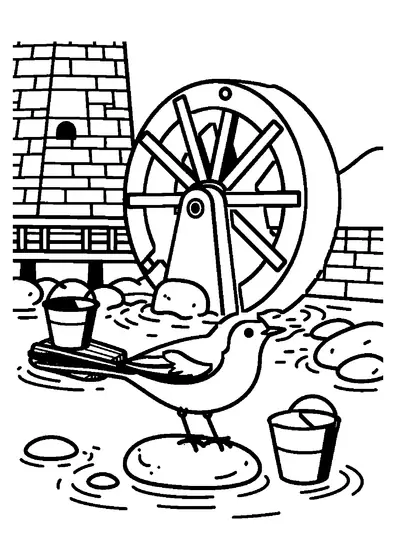
Heron Beside an Old Watermill Wheel
Wading herons hunt patiently along quiet riverbanks near historical wooden watermill wheels.

A4 format (portrait), black outlines on a white background · for home and classroom use
All coloring pages: Bird Coloring Pages
Similar coloring pages: Bird Coloring Pages


What else can you print? Free, no account needed
Custom Name Coloring Pages
Enter your child's name to generate a custom coloring page featuring large outline letters to color and decorate.
Open generator →Connect the Dots Generator
Eight connect-the-dots pictures across three difficulty levels. Features faint outline guides for younger children and dots only for older kids.
Open generator →Printables
Worksheets, tracing lines, mazes and dot-to-dots in A4.
Browse printables →
Wetland Birds Near River Mill Wheels
Herons frequent calm riverbanks near traditional wooden watermills, searching for small fish in the flowing current. These tall wading birds stand motionless near wooden wheel paddles, using their sharp eyesight to monitor underwater movement. Old watermills rely on flowing river streams to turn large timber wheels that once powered mechanical grain grinders.
Facts About Wading Herons and Waterwheels
Herons possess long, slender legs and sharp pointed beaks specially adapted for hunting in shallow aquatic environments. Watermill wheels use the natural force of gravity and moving river water to generate mechanical power without electricity. The damp, mossy timber of working waterwheels creates ideal microhabitats for aquatic insects and small fish.
Real Colors of Herons and Watermill Structures
- Heron body plumage: soft gray, blue-gray, and white
- Heron bill and feet: dull yellow or orange-yellow
- Wooden waterwheel timber: dark brown with patches of moss green
- River water surface: deep aquatic blue and turquoise
- Mill building stone or wood: rustic gray-brown