
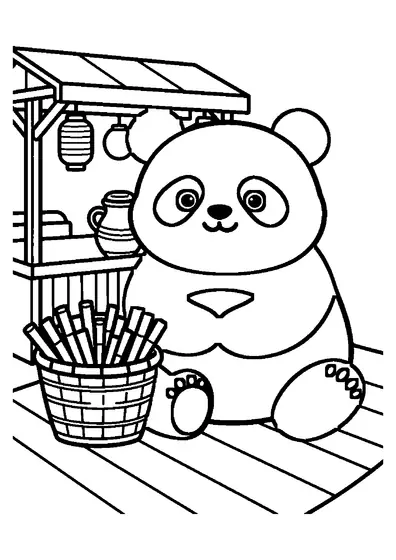
Panda at a Bamboo Feeder
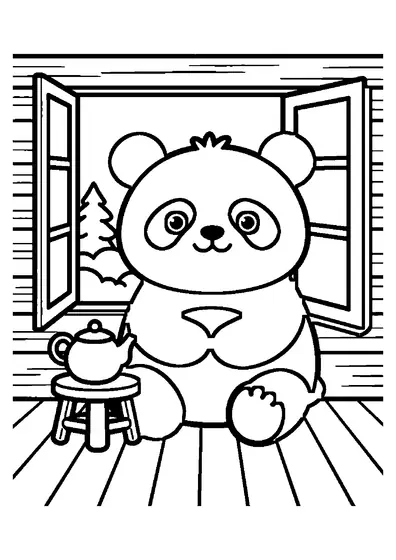
A giant panda enjoys bamboo inside a spacious zoo courtyard right next to a wooden feeding station.

A4 format (landscape), black outlines on a white background · for home and classroom use
All coloring pages: Panda Coloring Pages
Similar coloring pages: Panda Coloring Pages




What else can you print? Free, no account needed
Custom Name Coloring Pages
Enter your child's name to generate a custom coloring page featuring large outline letters to color and decorate.
Open generator →Connect the Dots Generator
Eight connect-the-dots pictures across three difficulty levels. Features faint outline guides for younger children and dots only for older kids.
Open generator →Printables
Worksheets, tracing lines, mazes and dot-to-dots in A4.
Browse printables →
Giant Panda Eating at a Zoo Feeder
In this courtyard environment, a giant panda sits near a large feeder filled with bamboo stalks. A sturdy rock wall and an outdoor shelter form the background of the feeding area. The panda holds bamboo while taking a meal in its enclosure space.
Interesting Facts About Panda Feeding Habits
Giant pandas spend up to twelve hours every single day chewing on raw bamboo shoots and leaves. Zoo keepers build specialized feeding stations and rock structures to encourage these bears to forage naturally. Even though bamboo makes up nearly all of their diet, pandas possess the digestive system of a carnivore.
Natural Colors of a Panda and Zoo Habitat
- Giant panda fur: crisp white on the head and back with dark black shoulders, ears, and leg patches
- Bamboo stalks: vibrant shades of green and yellowish tan
- Rock wall: natural tones of slate gray, charcoal, and earthy brown
- Wooden feeder: warm timber brown or weathered gray