
Giant Panda by a Feeder in a Forest Clearing
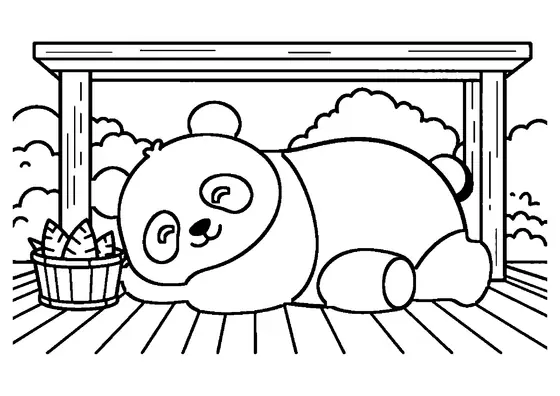
A giant panda sits near a wooden feeding station located in a quiet woodland area.

A4 format (landscape), black outlines on a white background · for home and classroom use
All coloring pages: Panda Coloring Pages
Similar coloring pages: Panda Coloring Pages



What else can you print? Free, no account needed
Custom Name Coloring Pages
Enter your child's name to generate a custom coloring page featuring large outline letters to color and decorate.
Open generator →Connect the Dots Generator
Eight connect-the-dots pictures across three difficulty levels. Features faint outline guides for younger children and dots only for older kids.
Open generator →Printables
Worksheets, tracing lines, mazes and dot-to-dots in A4.
Browse printables →
Giant Pandas in Woodland Clearings
A giant panda spends much of its day resting and feeding near wooden stations placed in woodland areas. These animals stay close to sources of plant shoots, enjoying peaceful natural settings surrounded by trees and open spaces.
Unique Habits of Giant Pandas
Giant pandas rely heavily on bamboo shoots as their primary food source, consuming large amounts every single day to meet their energy needs. Unlike many other bear species, they do not hibernate during the winter months because their fibrous diet provides steady energy year-round. They spend hours quietly stripping plant leaves and stems in dense forests.
Natural Colors of the Scene
- Giant panda fur: distinct pattern of white body hair paired with black ears, limbs, and eye patches
- Wooden feeder: earthy shades of brown, tan, or weathered gray
- Forest clearing ground: natural tones of green grass, fallen leaves, and brown soil
- Plant shoots: bright green to pale yellowish stalks