
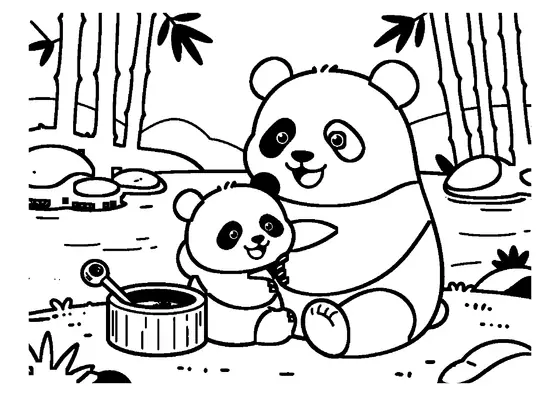
Giant Panda at the Entrance to a Bamboo Pavilion
A giant panda stands near the entryway of a traditional bamboo garden pavilion surrounded by architectural details.

A4 format (portrait), black outlines on a white background · for home and classroom use
All coloring pages: Panda Coloring Pages
Similar coloring pages: Panda Coloring Pages





What else can you print? Free, no account needed
Custom Name Coloring Pages
Enter your child's name to generate a custom coloring page featuring large outline letters to color and decorate.
Open generator →Connect the Dots Generator
Eight connect-the-dots pictures across three difficulty levels. Features faint outline guides for younger children and dots only for older kids.
Open generator →Printables
Worksheets, tracing lines, mazes and dot-to-dots in A4.
Browse printables →
Giant Panda by a Traditional Bamboo Pavilion Entrance
Traditional Asian garden architecture often incorporates bamboo poles, wooden beams, and tiled roofs to harmonize with nature. Giant pandas native to the bamboo forests of Sichuan are central figures in Asian wildlife heritage. Placing these animals near classic pavilions reflects the cultural connection between regional wildlife and traditional design.
Architecture and Nature in Asian Gardens
Traditional garden pavilions are open wooden structures designed to offer shade and scenic views of surrounding landscapes. Bamboo is widely used in construction across East Asia because of its strength, flexibility, and rapid growth rate. Gardens designed in harmony with local flora often attract native birds and small wildlife.
Real Colors of a Giant Panda and Garden Pavilion
- Giant panda fur: Crisp white fur across the torso with dark black fur on legs, arms, and ear tips
- Bamboo pavilion posts: Golden-yellow or light green bamboo stems
- Pavilion roof tiles: Terracotta red, slate gray, or dark charcoal
- Garden stones: Muted gray and beige pathway stones