
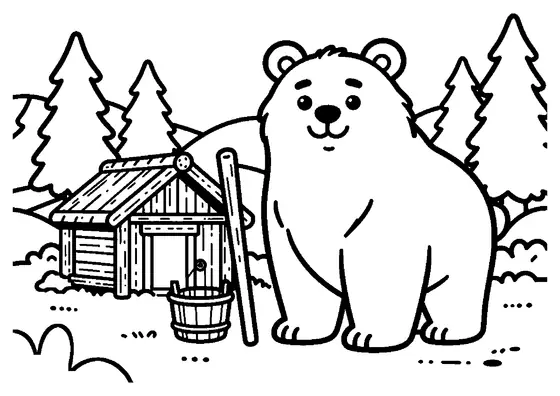
Brown bear looking at a wooden wildlife feeder
A wild brown bear examines a sturdy timber feeding station placed deep within a quiet forest habitat.

A4 format (landscape), black outlines on a white background · for home and classroom use
All coloring pages: Bear Coloring Pages
Similar coloring pages: Bear Coloring Pages



What else can you print? Free, no account needed
Custom Name Coloring Pages
Enter your child's name to generate a custom coloring page featuring large outline letters to color and decorate.
Open generator →Connect the Dots Generator
Eight connect-the-dots pictures across three difficulty levels. Features faint outline guides for younger children and dots only for older kids.
Open generator →Printables
Worksheets, tracing lines, mazes and dot-to-dots in A4.
Browse printables →
Forest Wildlife at a Wooden Feeder
This scene portrays a wild brown bear standing near a large timber wildlife feeding station in a wooded area. The wooden feeder structure is designed to hold grain or hay for forest animals during winter months. Tall trees and natural woodland vegetation surround the feeding area, illustrating how wildlife managers support animal populations in protected habitats.
Brown Bear Behavior and Foraging Habits
Brown bears possess an extraordinary sense of smell, capable of detecting food sources from several miles away. While omnivorous bears gather berries, roots, and nuts during autumn to build fat reserves for hibernation, forestry workers sometimes erect wildlife feeding stations to supplement diets for deer and other woodland species. In regions with harsh winters, these stations help maintain healthy ecosystem balances across large nature preserves.
Real-World Colors of Woodland Wildlife
- Brown bear fur: dark chestnut brown, golden tan, or dark grizzly tones
- Wooden wildlife feeder: natural pine timber, weathered gray, or cedar brown
- Forest tree trunks: rough dark brown, charcoal, or mossy green bark
- Wild woodland foliage: vibrant green leaves, fern green, or autumn gold